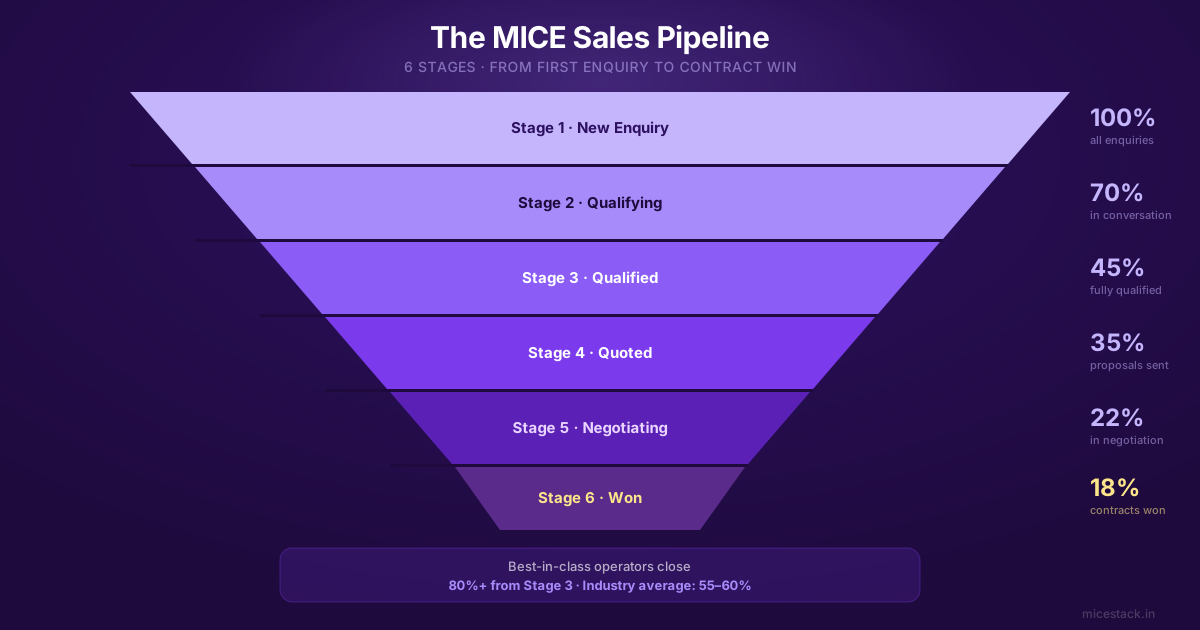
Ask most Indian MICE operators where a particular deal stands, and they'll tell you. Ask them how many deals are currently at the quoting stage, what percentage of qualified leads convert to contracts, or which source produces the best clients — and you'll get a pause.
That's not a knowledge gap. It's a systems gap. When your pipeline lives in a notebook, a WhatsApp thread, or the sales person's head, you have no pipeline. You have a list of conversations at varying temperatures, with no consistent way to know what each one needs or when.
The cost is not just operational. It's commercial. Deals fall through follow-up cracks. Quotes go out and sit unanswered because no one flagged that 48 hours had passed. Good enquiries get deprioritised in favour of whoever sent a WhatsApp message most recently.
A structured pipeline changes this — not by adding bureaucracy, but by making the next action on every deal obvious.
Why a Pipeline Matters in MICE Sales
The MICE buying cycle is longer and more complex than most B2B purchases. A single conference for 200 people can involve the admin team making initial enquiries, a procurement head approving the vendor, a CFO signing off on the budget, and a CEO who wants to see the final programme. It can span six to twelve weeks from first contact to contract.
During that window, multiple things can kill the deal silently: a competitor proposal that lands faster, an internal budget freeze, a procurement process the operator didn't know existed, or simply the client losing confidence because follow-up went cold.
A pipeline with defined stages gives you visibility into where every deal is, which deals are stalling, and what the right action is — right now — for each one.
The 6 Stages
What it means: An enquiry has arrived — via WhatsApp, email, referral, your website, or an event platform. Nothing has been qualified yet.
Information you should have: Client name and company, event type (conference, incentive, offsite, retreat), rough dates, approximate pax count, and the source of the enquiry.
The action to move it forward: Qualify within 24 hours. Call or WhatsApp the contact directly to confirm two things: budget range (even a rough indication — "are you thinking ₹5 lakhs or ₹50 lakhs?") and who is involved in the decision. If you can't get a response within 48 hours, flag the deal as cold and set a one-week follow-up reminder. Don't let it age silently.
What it means: You're in active conversation. The client is real, the event is real, and you're gathering enough information to assess whether this is worth building a full proposal.
Information you should have: Budget range confirmed (even a bracket), destination or destination shortlist, event dates locked or near-locked, whether an RFP has been sent or is in development, and who else is quoting.
The action to move it forward: Send a Preliminary Budget Indication (PBI) — not a full quote. This is a one-page summary that says: "Based on what you've described, a programme of this scope typically runs ₹X to ₹Y per person, depending on hotel tier and activities." The PBI does two things. It demonstrates competence (you can size the brief quickly) and it qualifies intent. A client who responds positively to the PBI is a serious buyer. A client who goes quiet was never going to convert.
What it means: Decision maker identified, budget confirmed, dates locked. This is a serious deal.
Information you should have: Full RFP or detailed brief, supplier and destination requirements, any preferred properties or vendors, and whether there's an incumbent operator you're competing against.
The action to move it forward: Begin building the quote. If the destination is peak season — October–December Goa, April–June hill stations, January for international — block supplier inventory before you present. The worst outcome is winning the quote but losing the booking because the hotel sold out while you were waiting for client approval.
What it means: A full, formal proposal has been sent to the client.
Information you should have: Who received the proposal, the client's internal review and approval timeline, and whether there are other stakeholders who need to see it before a decision is made.
The action to move it forward: Follow up within 48 hours. Not to push — to offer a walkthrough call. Frame it this way: "I wanted to check if you had any questions about the proposal, or if it would help to walk through the programme together." Many deals die at this stage not because the client is unhappy, but because they have a question they didn't bother to email about, and the silence gets interpreted as disinterest on both sides. A 20-minute call can reopen the conversation.
What it means: The client is engaged, has reviewed the proposal, and wants changes — to price, programme, or components.
Information you should have: What specifically the client wants changed, which components have flexibility (and which don't), and what the client's actual leverage is. A client asking for a 15% discount two days before a peak-season block expires has less leverage than they think.
The action to move it forward: Version your quote — not your word document. Every revision should be a timestamped version with a clear change log: what was removed, what was substituted, and how that changes the total. This creates a paper trail and prevents scope-creep confusion later. When under pressure to reduce cost, offer programme alternatives before price reductions — substitute one hotel for another, remove one activity, adjust transport configuration. Price discounting trains clients to negotiate harder on every future booking. Programme alternatives preserve the relationship and your margin.
What it means: The deal has closed in either direction.
Won action: Generate the operations brief immediately — don't let the post-win handoff happen over WhatsApp. The brief should include confirmed programme, supplier contacts, payment schedule, and client escalation contacts. This is where margin gets protected or lost.
Lost action: Tag the loss reason before closing the deal. Price (you were outbid), competitor (client had a preferred operator), timing (they postponed or cancelled), or no decision (internal budget freeze or stakeholder change). This data compounds over time. If you track loss reasons for six months, you'll have a clear picture of where your pipeline is actually leaking — and it's rarely where you think it is.
Win Rate Benchmarks for Indian MICE
From Stage 3 (Qualified) to Won: best-in-class MICE operators in India close 80% or more of the deals they formally quote. The industry average is closer to 55–60%.
The gap almost never comes from the Qualifying stage — most operators are reasonably good at determining who's serious. The gap lives in Stages 4 and 5: Quoted and Negotiating. Proposals that go out and don't get followed up on. Negotiations handled with blanket discounting rather than structured alternatives. Deals that drift because no one owns the next action.
Win rate improvement, for most operators, is a follow-up and negotiation discipline problem — not a pricing problem.
What Most Operators Get Wrong
No source tracking. If you don't know whether WhatsApp referrals convert better than website enquiries, you can't make an informed decision about where to invest your business development effort. Tag the source at Stage 1. It takes ten seconds and the data is valuable.
No assigned deal owner. In a small team, "everyone" follows up with a client. In practice, that means no one does. Every deal should have a single named owner who is responsible for moving it forward. When a deal stalls, there should be no ambiguity about whose job it is to fix it.
Won equals done. The most common margin leak in MICE is not in the quote — it's in the post-win phase. Scope additions that weren't documented, supplier changes that weren't approved, client expectations that weren't managed. A structured ops handoff at Stage 6 Win is not administrative overhead. It's margin protection.