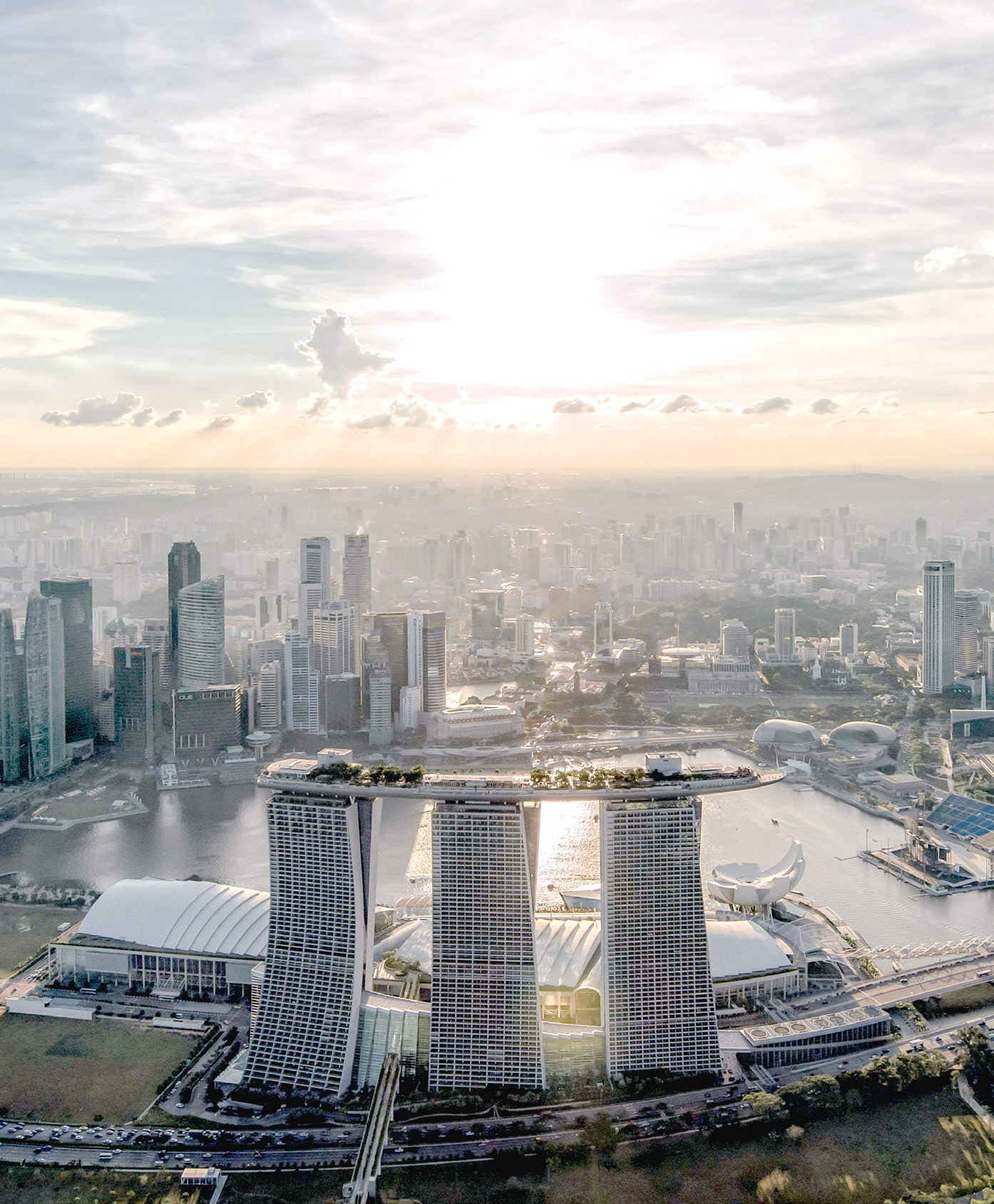
 Singapore's Marina Bay district — home to MICE venues that are setting carbon benchmarks for the industry. Image courtesy of Marina Bay Sands.
Here's a number that will matter to your next RFP: 14.13 kgCO2 per attendee. That's the average carbon emission from a MICE venue in Singapore, measured across six purpose-built convention centres by the Singapore Tourism Board.
Why does an Indian MICE operator need to know this? Because your clients are starting to ask. Sun Pharma, Infosys, TCS, Mahindra — large Indian corporates now include ESG and sustainability requirements in their event procurement. If your proposal can show that the venue is carbon-neutral, LEED Platinum certified, and tracks emissions per attendee, you move ahead of every operator submitting a generic PDF quotation.
Singapore is the first country in the world to establish a national MICE industry carbon and waste baseline. The data comes from STB's MICE Venue Sustainability Playbook — a framework covering energy, water, and waste across the country's six major convention venues. This article breaks down what's in it and how to use it in your proposals.
The Baseline: How Singapore Measured It
In 2023, Singapore took the pioneering step of establishing a national MICE Industry Carbon and Waste Baseline — one of the first countries in the world to do so. The Singapore Tourism Board gathered standardised data from six purpose-built MICE venues:
- Changi Exhibition Centre
- Raffles City Convention Centre
- Resorts World Convention Centre
- Sands Expo & Convention Centre (Marina Bay Sands)
- Singapore EXPO
- Suntec Singapore Convention & Exhibition Centre
The assessment followed the Net Zero Carbon Events (NZCE) methodology and the Greenhouse Gas Protocol for Scope 1 and 2 emissions. Data was collected across three categories: Energy, Water, and Waste.
The Key Numbers
| Metric | Value |
|---|---|
| Average carbon emissions per attendee | 14.13 kgCO2 |
| Share of emissions from Energy | 94% |
| Remaining emissions (Water + Waste) | 6% |
| Assessment year | 2023 |
| Formula | GHG Emissions = Activity Data × Emissions Factor |
The 94% energy figure is the critical insight. Almost all venue-related carbon comes from electricity — HVAC, lighting, AV equipment, and building operations. Water and waste contribute relatively little to the carbon number. This means decarbonisation efforts in Singapore MICE venues focus overwhelmingly on energy.
How Emissions Are Calculated
| Source | Activity Data | Emissions Factor |
|---|---|---|
| Energy | Fuel consumption, purchased electricity, heating/cooling, refrigerants | Singapore Grid Emission Factor (Energy Market Authority, 2022) |
| Waste | Emissions from collection, transport, and disposal of all waste types including wastewater | USEPA GHG Emission Factors Hub |
| Water | Water consumption from the MICE venue | Life cycle assessment of water supply in Singapore (water-scarce urban city) |
| Events Data | Number of events, number of attendees, event space (gross floor area) | From venue's own data collection |
Two metrics are used for benchmarking:
Emissions per unit area = Total Emissions from Electricity (kgCO2e) ÷ Venue Area (sqft)
Emissions per attendee = Total Emissions (kgCO2e) ÷ Total Number of Attendees for the Year
The per-attendee metric is the one your clients will care about. It allows direct comparison between venues and gives corporates a number to put in their sustainability reports.
STB's Three Targets
The MICE Sustainability Committee (a collaboration between SACEOS and STB) unveiled the MICE Sustainability Roadmap in December 2022, aligned with the Singapore Green Plan 2030 and the UN Sustainable Development Goals.
| Target | Deadline |
|---|---|
| Develop sustainability standards and achieve international recognition | 2024 |
| Obtain sustainability certification for purpose-built MICE venues and 80% of SACEOS members | 2025 |
| Start tracking waste and carbon emissions, reduce them, and achieve net zero | 2050 |
The certification target applies to all MICE industry players — event organisers, venues, stand builders, contractors, and F&B caterers. This means that by 2025, the majority of Singapore's MICE supply chain is expected to hold sustainability credentials.
What this means for your proposals: When a corporate client asks "is the venue sustainable?", Singapore venues don't just say yes — they hand you a certification number, an emissions-per-attendee figure, and an annual sustainability report. Try getting that from a hotel in Goa or Jaipur.
Certifications That Matter
MICE-Specific Certifications
| Certification | What It Covers | Who Issues It |
|---|---|---|
| Singapore MICE Sustainability Certification (MSC) | Equips and certifies businesses for sustainable practices across Singapore's MICE industry. Three tiers based on readiness. | SACEOS |
| GSTC MICE Criteria | Global sustainability standards for the MICE industry — sustainability planning, local community benefit, cultural heritage, and environmental impact | Global Sustainable Tourism Council (with STB and SACEOS support) |
| ISO 20121 | Event sustainability management systems — integrates sustainability into every aspect of event planning and execution | International Organisation for Standardisation |
| EIC Sustainable Event Standards | Eight specific standards assessing events and suppliers on environmental and social responsibility — covers F&B, venue, exhibition services, AV, and more | Events Industry Council |
Infrastructure Certifications
| Certification | What It Covers | Who Issues It |
|---|---|---|
| Green Mark | Green building rating — energy efficiency, water efficiency, carbon footprint, indoor environmental quality | Building & Construction Authority (BCA), Singapore |
| Singapore Certified Green Building (SGCB) | Recognises green building products and facilitates sustainable procurement | Singapore Green Building Council |
| LEED | Leadership in Energy and Environmental Design — global green building standard | US Green Building Council |
Marina Bay Sands holds: LEED Platinum, BCA Green Mark, Singapore MICE Sustainability Certification (Gold), and EIC Sustainable Event Standards (Platinum). It is also Singapore's only carbon-neutral MICE venue. For the full venue breakdown, see our Marina Bay Sands MICE Venue Guide.
Energy: Where 94% of Emissions Come From
Since energy accounts for nearly all venue emissions, STB's playbook focuses heavily on energy recommendations.
Energy Audit
Every venue should conduct a comprehensive energy audit to identify waste areas — inefficient HVAC, poor insulation, over-lit spaces. This is the starting point for any decarbonisation plan.
IoT-Enabled HVAC
Internet-of-Things HVAC systems automatically adjust settings based on occupancy, weather, and time of day. Two strategies:
- Occupancy-based: Sensors on ceilings detect people, adjust temperature accordingly. Empty halls cool down. Full halls ramp up.
- Scheduled: System operates at 25°C during daytime, higher in evenings. Every 1°C increase saves approximately 3% of electricity costs on air conditioning.
Smart Lighting
| Strategy | How It Works |
|---|---|
| Automatic lighting control | Sensors detect occupancy — lights turn off in empty rooms and unoccupied exhibition areas |
| Daylight harvesting | Integrates with natural light through windows/skylights — dims artificial lighting when daylight is sufficient |
| Zoning | Divides exhibition halls into zones — unused areas automatically dimmed or off |
| LED conversion | LEDs last 3-5x longer than CFLs, 30x longer than incandescent. Emit directional light, reducing need for reflectors and diffusers |
Renewable Energy
Rooftop solar — Singapore EXPO installed 16,508 solar panels covering an area equivalent to 6.5 football fields. This is Singapore's largest single-site solar rooftop installation. It powers the venue's operations, supports 20 EV chargers, and reduces CO2 by the equivalent of 500 round trips between Singapore and New York annually.
Renewable Energy Certificates (RECs) — venues can purchase RECs representing 1 megawatt-hour of renewable electricity, increasing their renewable proportion without installing their own panels.
Power Purchase Agreements (PPAs) — a financial arrangement where a solar developer designs, installs, and maintains a solar system on the venue's property at little to no cost. The developer sells the energy back to the venue at a fixed rate. Customers benefit from a reduced electric bill and a smaller carbon footprint.
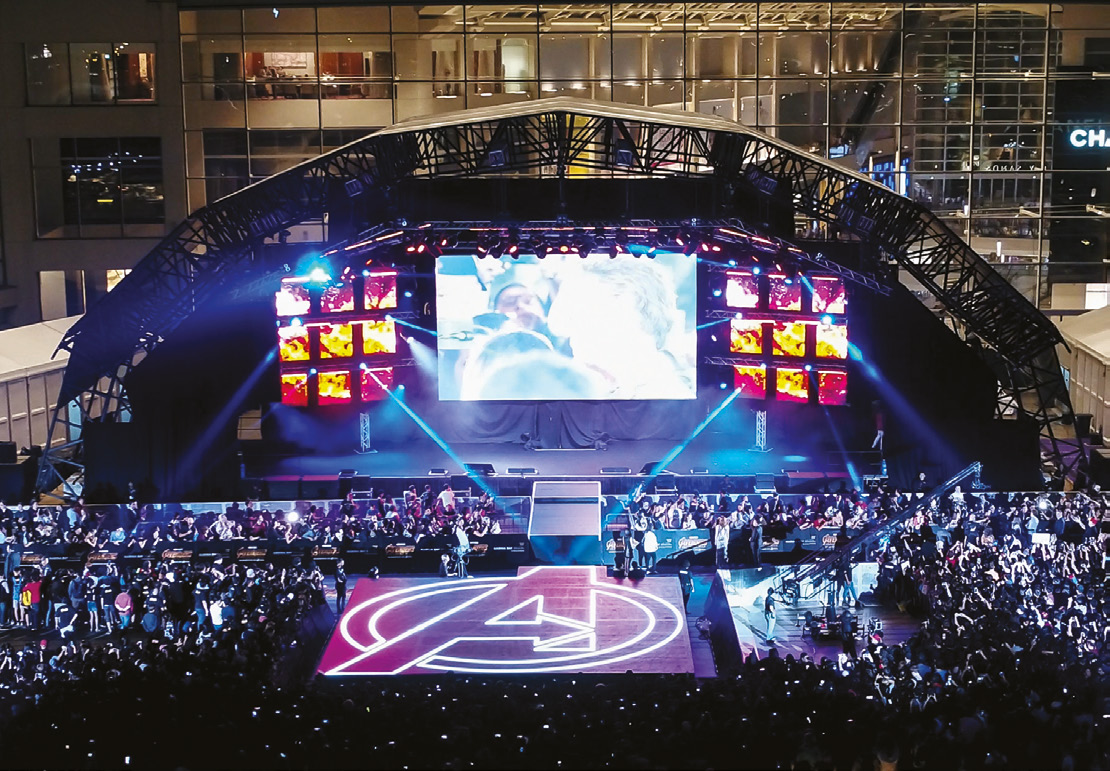 Singapore MICE venues are implementing solar, LED lighting, and IoT HVAC across their event spaces. Image courtesy of Marina Bay Sands.
Case Study: Fiera Milano's 21% Emission Reduction
Milan's Allianz-MiCo Congress Centre converted 100% of its electricity to renewable sources using a combination of solar PV installations and RECs. Result: a 21% reduction in Scope 2 emissions (electricity) from the 2019 baseline to 2022. Scope 2 emissions dropped from 19,669 tonnes to 15,506 tonnes.
Waste: Audit, Compost, Reduce
Waste Baseline Audit
A systematic review of all waste generated — identifying key streams, contamination sources in recycling, and areas where investment in infrastructure (recycling bins, signage) is needed.
Food Waste Management
- Composting — organic waste from events turned into compost for landscaping
- Food waste digesters — can process up to 1 tonne of food waste per day. Supported under Singapore's National Environment Agency (NEA) 3R Grant.
Source Reduction
The highest-impact strategy: reduce waste at the source.
- Digital communication instead of printed materials
- Reusable or compostable materials instead of single-use plastics
- Glass and reusable water jugs instead of plastic bottles
Marina Bay Sands Waste Practices
- Comprehensive waste collection and recycling programme with dedicated multi-stream recycling bins across Sands Expo & Convention Centre
- 5 aerobic digesters on-site that transform food waste into residual material
- Collaborates with contemporary artisans to create new products from circular materials — showcasing commitment to sustainable waste management
- Donated over 30,000 kg of food to vulnerable communities through the Food Bank Singapore, across 370+ charities since 2016
- Over 100 elegant water filters at the convention centre to reduce bottle consumption
Water: The Smaller But Important Piece
Water contributes less to carbon emissions but is critical for resource management — especially in Singapore, a water-scarce urban city.
Certifications and Standards
- Water Efficient Building (WEB) Certification from PUB (Public Utilities Board) — by adopting water-efficient fittings and following recommended flow rates, venues save up to 5% of monthly water consumption
- Water Efficiency Labelling Scheme (WELS) — products rated zero to four ticks for water efficiency
Conservation Strategies
| Strategy | How It Works |
|---|---|
| Rainwater harvesting | Rooftop collection systems for toilet flushing, irrigation, and cooling tower makeup |
| AC condensate reuse | Air conditioning condensate collected from AHUs (air handling units) — low dissolved mineral content makes it suitable for cooling towers, irrigation, and toilet flushing |
| Greywater recycling | Untreated used water (not contaminated with toilet waste) treated and disinfected for reuse in flushing, washing, and irrigation |
Case Study: Resorts World Sentosa
49% of water drawn from alternative sources — rainwater, reclaimed water, seawater, and NEWater. Rainwater is harvested for lagoons, swimming pools, and irrigation. Seawater is processed for the S.E.A. Aquarium's life support system. NEWater is used for the district cooling plant and chiller plant. Result: nearly 5% reduction in NEWater usage and WEB certification from PUB.
Government Funding for Sustainability
Singapore offers grants that MICE venues can access to fund sustainability upgrades. Indian operators should know about these — they explain why Singapore venues can afford to invest in sustainability without passing all costs to the client.
| Grant | Agency | What It Funds |
|---|---|---|
| Green Mark Incentive Scheme (CMIS-EB 2.0) | Building & Construction Authority (BCA) | Energy conservation — retrofits to cooling systems, natural ventilation, hybrid cooling |
| 3R Fund | National Environment Agency (NEA) | Waste management — redesign packaging, install new recycling infrastructure |
| Water Efficiency Fund (WEF) | Public Utilities Board (PUB) | Water conservation — efficiency assessments, recycling projects, water-efficient equipment |
| Green & Sustainability-linked Loan Grant Scheme (SLCS) | Monetary Authority of Singapore (MAS) | Green financing — independent sustainability advisory and assessment services |
All of these are available through the Tourism Sustainability Programme (TSP), which supports tourism businesses at all stages of their sustainability journey.
What This Means for Indian MICE Operators
For Your Proposals
When your client's procurement team asks about sustainability, you can now include:
- The number: 14.13 kgCO2 per attendee — Singapore's measured MICE venue baseline
- The certifications: MSC, GSTC, ISO 20121, EIC, LEED, Green Mark — specific to each venue
- The proof: Marina Bay Sands is carbon-neutral at no additional cost to the organiser
- The comparison: No Indian MICE venue has published comparable per-attendee emission data. Singapore has.
For Your Competitive Positioning
Indian corporates are increasingly required to report on ESG. Events are part of that reporting. If you can show a client that their 500-delegate conference in Singapore generated a measurable, certified, and offset carbon footprint — while the same event in a non-certified Indian venue generated an unmeasured, unreported footprint — you have a tangible differentiator.
For Pricing Conversations
Sustainability is often perceived as a cost. In Singapore, it's subsidised by the government (BCA, NEA, PUB, MAS grants) and absorbed by the venue (carbon-neutral meetings at no extra cost at Marina Bay Sands). Your proposal doesn't need a "sustainability surcharge" line item — it's built into the venue.
For the full list of STB incentive programmes that reduce costs for Indian operators, see our guide to INSPIRE, SMAP, and Just Between Us Friends.
Frequently Asked Questions
What is the average carbon emission per attendee at Singapore MICE venues? 14.13 kgCO2 per attendee, based on 2023 data from six purpose-built convention centres measured by the Singapore Tourism Board.
What percentage of MICE venue emissions come from energy? 94%. Almost all venue-related carbon comes from electricity — HVAC, lighting, and building operations. Water and waste account for the remaining 6%.
Is Marina Bay Sands a carbon-neutral venue? Yes. Marina Bay Sands is Singapore's only carbon-neutral MICE venue, offering 100% carbon-neutral meetings at no additional cost to the organiser.
What sustainability certifications should I look for in Singapore MICE venues? Singapore MICE Sustainability Certification (MSC), GSTC MICE Criteria, ISO 20121, EIC Sustainable Event Standards, and infrastructure certifications like LEED and Green Mark.
Do Singapore venues charge extra for sustainability? No. Sustainability is government-subsidised and venue-absorbed. Marina Bay Sands offers carbon-neutral meetings at no additional cost. Other venues include sustainability as standard.